Innovation Impact Case Award
The Innovation Impact Case Award recognizes research that has led to significant impact outside of academia and has made a meaningful difference in our communities. Impact is a fundamental aspect of almost all research programs and is more important than ever.
The award celebrates work that solves challenges benefiting individuals, communities, and organizations. Innovation and impact are defined broadly and inclusive of work in all disciplines.
Innovation
Innovation refers to solving a problem or challenge and is found in all disciplines and inclusive of all types of outcomes that solve problems (e.g., development of policy, production of new cell lines, or product creation).
Impact
Impact refers to academic, societal, and economic contributions that advance science and benefit individuals, organizations, and nations. Research impact can contribute in countless ways. Here are nine different areas of research impact, though most research will have impacts in multiple areas:
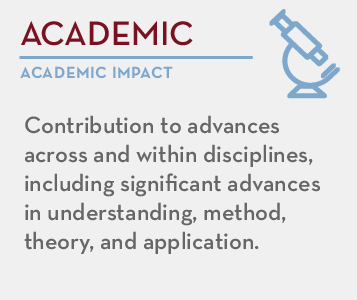
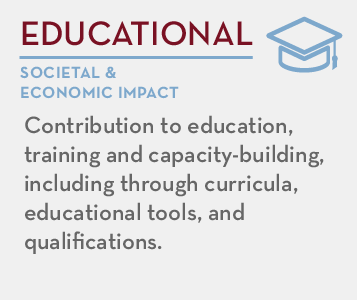
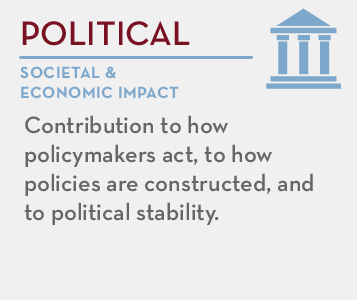

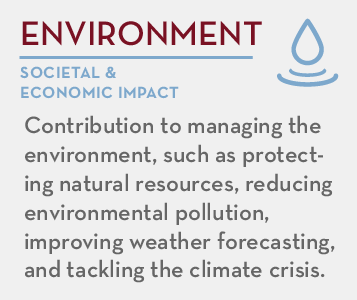
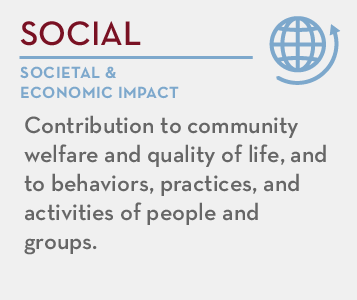
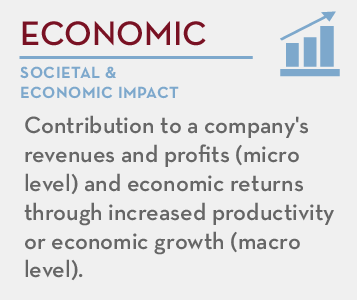
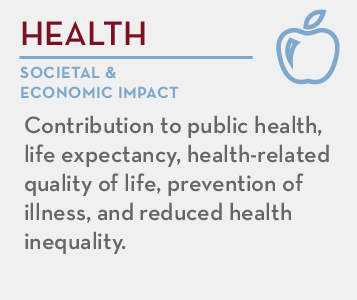
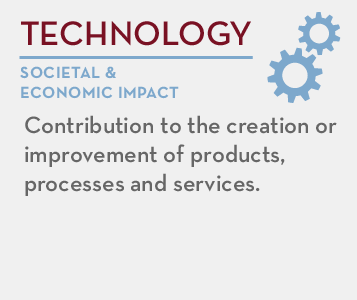
Source: University College Dublin Impact Classification System based on European Science Foundation taxonomy.
Funding Cycle
Two awards will be given to two outstanding individuals or teams that demonstrate the impact and innovation of their research. Award recipients will receive $10,000 per case.
Timeline:
- April 1, 2024 - Innovation Impact Case Award opens
- May 6, 2024 - Deadline to submit applications (by 5:00 p.m. CST)
- August 2024 - Announce winners, publish stories
Eligibility & Requirements
The competition is open to all eligible UMN faculty and researchers systemwide, regardless of discipline, who meet the University of Minnesota's IRB designation of "Eligible to Serve as PI."
Eligible to Serve as PI
- Non-tenure-track research and/or clinical faculty (full, associate, and assistant professors)
- Tenure-track faculty (full, associate, and assistant professors)
- Professional and Academic (P & A) employees in the following classifications: 9341A3, 9341D1, 9341D2, 9341S3, 9342K3, 9342M3, 9342M4, 9354D1, 9354M2, 9354M3, 9363M2, 9702, 9714, 9715S1, 9715S2, 9724M2, 9742N2, 9742R5, 9742R6, 9742R7, 9742S2, 9742S3, 9745S2, 9745S3, 9745S4
- Associate University Librarians (9363D2), Assistant Librarian (9715), Associate Librarian (9714) and Librarian (9713)
- Senior research investigators (Faculty with emeritus status or who are tenured and retired but wish to continue as PI)
Requirements
This competition requires the development of a short written case study highlighting the impact of research to an external audience. We are also requesting submission of any compelling photos, illustrations, or videos that help to tell the research story.
Other requirements include:
- Research must have been conducted within the last three years.
- Research must comply with all research rules and ethics.
- RIO has no requirement to give awards if submissions do not meet the criteria or intent of the award.
- The applicant(s) gives RIO rights to publish each case study on UMN websites and in other marketing and promotional materials.
- The applicant(s) must ensure all contributors are included in the case and are notified of the application.
- The applicant(s) may submit only one case.
Evaluation Criteria
Each submission will be reviewed and given a holistic rating by each of three members of the review committee composed of internal UMN faculty and staff and external partners representing the government agencies and communities. Evaluation criteria will include:
- Relative importance of the problem addressed
- Degree of imagination and innovation in concept and approach
- Potential for near-term meaningful impact/change
- Potential for sustainability and/or growth of the innovation
- Proposal clarity and quality of story writing
- Quality of research
There will be special consideration for cases that impact Minnesota. Final selection will be made by the vice president for research and innovation.
Application Instructions
To apply, complete all sections of the Innovation Impact Case Award submission form: z.umn.edu/innovation-impact. Application forms must be complete; incomplete applications will not be evaluated.
If you have any questions about any aspect of this competition, please email facgrant@umn.edu.